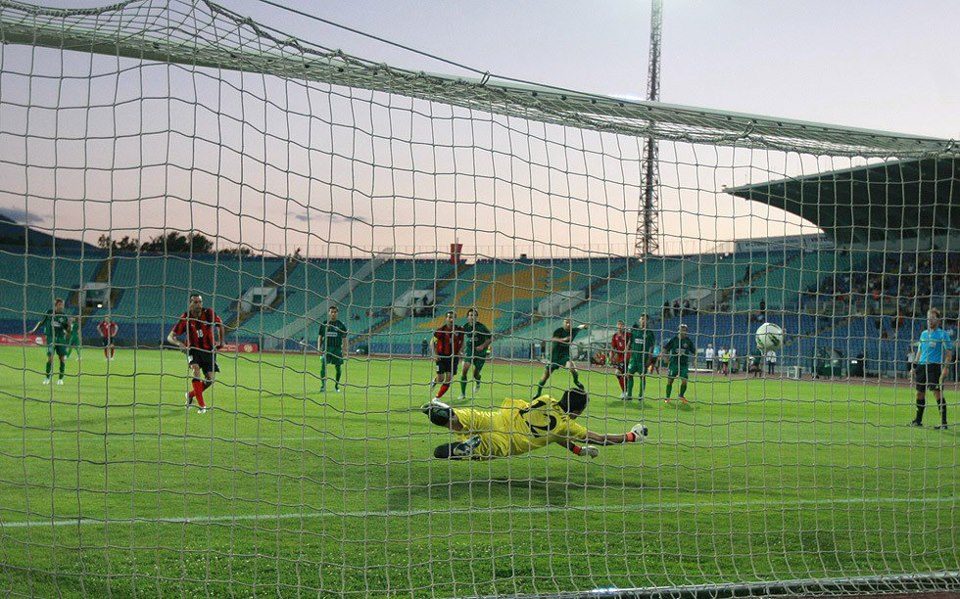
Few moments in sport compress as much tension into as little time as a penalty shootout. It looks simple — one kicker, one goalkeeper, twelve yards — but the format has precise rules, and a surprising amount of strategy hides inside them.
When a shootout happens
Shootouts only occur in knockout matches that must produce a winner. If the score is level after ninety minutes, most competitions first play extra time: two halves of fifteen minutes. Only if the teams are still level does the referee take the game to penalties. In some competitions, notably certain cup formats, extra time is skipped and a draw goes straight to spot kicks.
The format: best of five, then sudden death
Each team nominates five takers from the players on the pitch at the final whistle, and a coin toss decides who shoots first and at which end. Teams alternate kicks, and the shootout can end early: if one side leads by more than the other can mathematically catch, it is over. Level after five each? The shootout continues one round at a time — sudden death — until one team scores and the other misses. Every player on the pitch, including the goalkeeper, must take a kick before anyone shoots twice.
Rules at the spot
The taker may stutter their run-up but cannot stop completely after the final step before striking the ball. The goalkeeper must have at least part of one foot on or above the goal line when the kick is struck, and may not touch the posts, crossbar or net. Encroachment by other players — who must stay in the centre circle — can force a retake. A penalty in a shootout is one shot only: no rebounds.
Why order and nerves matter
Statistically, most professional penalties are scored, which is why misses feel so decisive. Teams usually spread their most reliable takers across the first kicks rather than saving the best for a fifth that may never come, and goalkeepers study takers' habits beforehand. The rest is composure — which is exactly what makes shootouts unforgettable.
Famous formats and variations
The alternating A-B-A-B order has been standard for decades, though governing bodies have experimented with an A-B-B-A sequence — borrowed from tennis tie-breaks — to soften the advantage of shooting first. Trials were quietly shelved, but the debate returns whenever a major tournament produces a lopsided shootout. Before shootouts became standard in the 1970s, drawn knockout ties were settled by replays or even coin tosses — a reminder that, for all their cruelty, penalties are at least decided on the pitch.
One more detail that often surprises viewers: yellow cards from the match do not carry into the shootout count for suspensions in most competitions, but a goalkeeper sent off during the shootout must be replaced by an outfield player if no substitutions remain — instant drama, and it has decided real finals.


