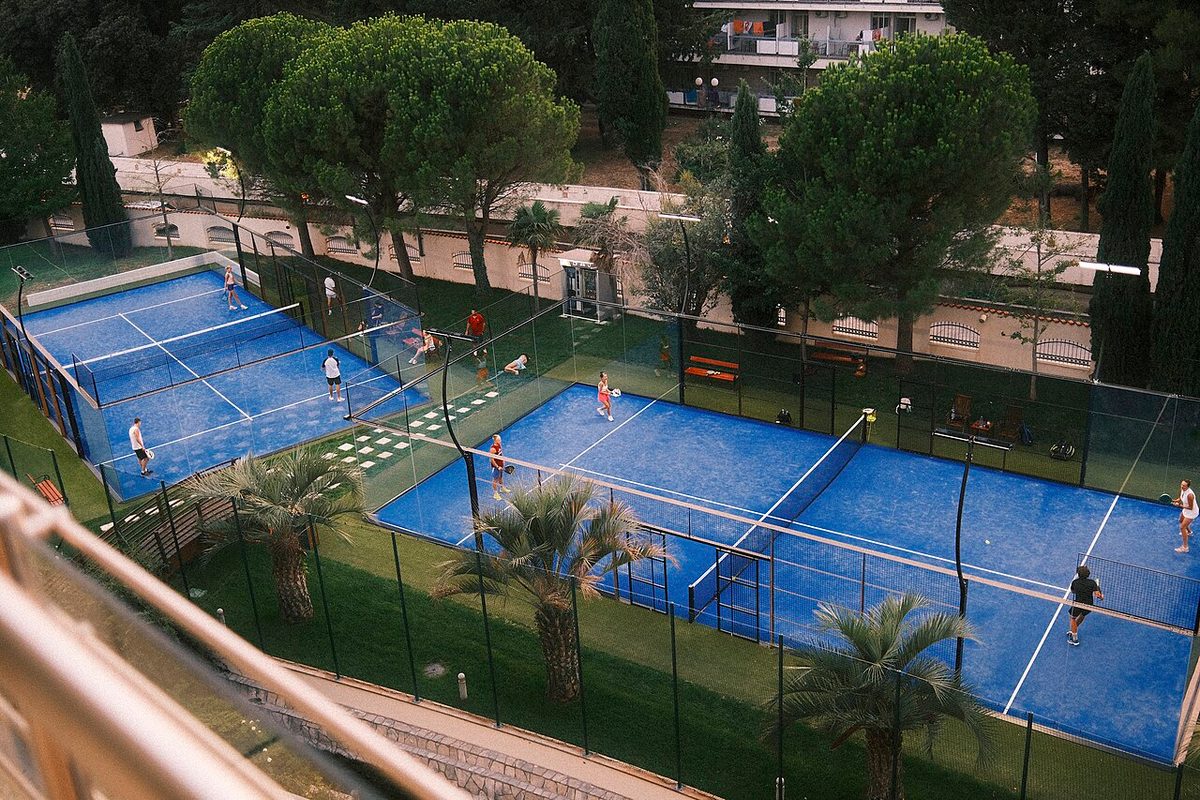
Padel has exploded from a niche pastime into one of the most played racket sports in Europe and Latin America, and its secret is simple: within one session, almost anyone can enjoy a real rally. It borrows tennis scoring, squash-style walls and a social doubles format, then wraps them in a smaller, friendlier package.
The court and the kit
A padel court is roughly a third the size of a tennis court and enclosed by glass and mesh walls, which are part of the game. It is almost always played as doubles. The racket is a stringless perforated bat, and the balls look like tennis balls but with slightly less pressure, keeping rallies manageable for newcomers.
Scoring and serving
Scoring is borrowed directly from tennis: 15, 30, 40, game, with sets to six games. The big difference is the serve, which must be struck underarm at or below waist height after bouncing the ball, diagonally into the opponents' service box. It makes serving a way to start the point rather than a weapon, which is a large part of why rallies last longer than in tennis.
How the walls work
The walls are what make padel padel. A ball must bounce on the floor first; after that, it may hit the glass and stay in play, and you can return it before or after it rebounds. You can even play the ball off your own back wall to send it over the net. Balls smashed over the enclosure can, at higher levels, be chased outside and returned — one of the sport's spectacular party pieces.
Why it is so easy to start
Because the court is small and the serve is gentle, beginners spend their first hour actually playing rather than collecting balls. Positioning and patience beat raw power, which keeps mixed groups competitive. All you need to bring is sports shoes — courts rent bats and balls almost everywhere.
Padel, paddle or pickleball?
The names cause endless confusion. Padel is the enclosed-court doubles game described here, biggest in Spain, Argentina and increasingly the rest of Europe. Pickleball, huge in the United States, is played on an open badminton-sized court with a plastic ball and no walls. And platform tennis — sometimes called paddle — is a North American winter game on a heated deck. If the court has glass walls and everyone is playing doubles with short bats, you are looking at padel.
If you want to try it, book an hour at an indoor centre with three friends and ask for a starter set. Most clubs run beginner sessions where a coach feeds balls and explains positioning — one such hour will teach you more than an evening of videos.
Expect your first games to revolve around three habits: move forward to the net with your partner, lob when you are in trouble, and let balls near the glass bounce off it instead of panicking. Master those and you will win points against players who only hit hard.


